
P&P Spotlight: Lila Holler
Blending vivid storytelling with a dark alternative sound, Lila Holler’s music gives a voice to our most quiet thoughts. She transforms uncomfortable emotions into something reflective, vulnerable, and deeply human - creating art that shows her listeners, particularly other young women, that they’re not alone. Her latest release, “Monster,” departs from her signature indie-pop style and instead takes the form of a guttural pop rock ballad, as she explores insecurity and comparison. “Monster” reflects on Lila’s personal experience being sexualized as a woman, capturing the complexity and exhaustion she associates with it. It includes striking images, such as stuffing her mother’s heels with old socks to make them fit her, to characterize the feeling of relentlessly trying to fit into a mold.
Recently, we caught up with Lila to talk about the inspiration behind the song, the emotions that shaped it, and how vulnerability continues to guide her songwriting. Keep reading for our full conversation with her.

Image credit: Tashi Dema, graphic created by Karly Ramnani
YOU'LL LOVE LILA HOLLER IF YOU LISTEN TO: Taylor Swift, Phoebe Bridgers, Lizzy McAlphine, Clairo, Gracie Abrams, Billie Eilish, Suki Waterhouse
“Monster” explores the idea of trying to fit into expectations that don’t always feel authentic. Would you say that writing this song helped you redefine what confidence or self-expression looks like for you?
I wrote “Monster” at a time when I really needed to hear the message myself. The whole song was inspired by Taylor Swift’s “Anti-Hero.” I remember being so struck by the lyric, “sometimes I feel like everybody is a sexy baby, and I'm a monster on the hill.” I really wanted to elaborate on that idea and how it feels to compare yourself to people from your partner’s past. I’m really intrigued by the idea that no matter how much confidence someone has, there are still going to be darker spots within us. Exploring those uncomfortable topics so openly actually brings me a lot of comfort. For me, writing songs like “Monster” is one of the biggest acts of self-love and self-expression I can give myself.
You’ve said the song came from a dark headspace. Did writing it feel more like confronting those feelings or releasing them?
I think it was a healthy balance of both. I usually write songs when I need to get something off my chest, so a lot of my songwriting naturally comes from that kind of headspace. What amazes me is that songwriting can help me feel understood by the world. When I listen back to a song I wrote from a dark place, it can feel like giving myself a warm hug and reminding myself that my emotions and thought processes are completely normal.
The song touches on something many women experience but don’t always talk about openly. What does it mean to you to give voice to that shared feeling?
Giving voice to shared feelings is always the goal when I write songs and especially when I release them. I have a deeply rooted love for women and the female experience, so being able to be a voice for the women around me who might not feel ready to start exploring those emotions themselves really means the world to me as an artist. I’ve also been on the receiving end of that kind of art many times. Sometimes someone puts something into words that you didn’t even realize you were feeling until you heard it. That kind of connection can be really healing, and in my opinion it’s exactly what women need right now.
“Monster” leans into a heavier alternative pop-rock sound compared to some of your earlier indie-pop work. What inspired that shift? Do you see this track as a turning point for where your music might go next?
I’ve always gravitated toward heavier production, so I think this shift is more of an evolution of my skills than a sudden change. I’ve been experimenting a lot with my songwriting lately and playing around with different genres. Indie-pop will always have my heart, but I do feel like my sound has grown beyond it in some ways. I had a lot of angst while writing “Monster,” which definitely inspired some of the grungier rock elements. Moving forward, I’m also interested in exploring some more mainstream pop sounds.

Image credit: Tashi Dema
We love the vivid imagery in “Monster,” especially lines like “trying on my mother’s heels.” When you’re writing, how important are visuals and storytelling in shaping a song?
I love visual music. I truly feel like a daughter of Taylor Swift in that sense. For me, vivid imagery can make or break how memorable a song feels. Adding little descriptive moments throughout my songs helps me build an entire universe around the emotion I’m trying to capture. Those small details are what really bring the story to life.
When you sit down to write, do you usually start with a lyric, a melody, or a feeling you’re trying to capture?
I almost always start with lyrics and melody at the same time. A lot of the time I don’t even realize what I’m writing about until I’m halfway through the song. Ideas come to me constantly when I’m out and about, so I’m always recording little melodic or lyrical ideas in my phone. Later on I sit down by myself and start shaping those ideas into something more complete.
Your music often feels very emotionally honest. Do you ever find it difficult to balance vulnerability in your songwriting with sharing those songs publicly? Specifically with “Monster,” what emotions came up as you prepared to release it?
One thing I’ve come to accept as an artist is that songwriting does require a certain level of sacrifice. Sometimes I really do have to put my personal life out there in order to connect with people. When I was younger, that felt really scary, even though I’ve always leaned toward a very personal style of songwriting. Now, it feels much more natural. Giving up a little bit of privacy is worth it if it helps someone else feel less alone. Over time I’ve learned that vulnerability is almost always worth it.
You’ve mentioned artists like Phoebe Bridgers, FKA twigs, and The Marías as influences. How have they shaped your approach to songwriting or sound?
What stands out to me about the artists I love is the authenticity you can feel in their music. When I’m listening to a song and it feels real and raw, that’s what stays with me. I really admire songwriters who prioritize honesty and quality in their work. Those are the artists who inspire me the most and push me to write from the heart no matter what emotion I’m exploring.

Image credit: Tashi Dema
You’ve spent time in the U.S. and now Liverpool. How has experiencing both places shaped the way you write or see the world?
Travel and life experience are incredibly important for my writing. I remember being stuck in a bit of a writer’s block once and my mom gave me great advice. She said that as a writer you need to step away sometimes and have experiences so you have something new to write about. Moving abroad has definitely given me a lot more to translate into my music. That experience helped me learn so much about myself, and it gave me the space to really discover my artistic voice.
You started writing music after receiving a guitar at 14. Looking back, what do you think that younger version of yourself would say about where your music is today?
I think she would be completely blown away. There was a time when the idea of releasing music felt almost impossible, and I had no idea how artists even made that happen. I try to remember that perspective when I think about where I am now. Someday I hope I’m playing huge shows and looking back on this moment the same way, realizing that what once felt like a distant dream slowly became reality.
For someone hearing your music for the first time through “Monster,” what do you hope they take away from the song?
More than anything, I hope people feel understood. The listeners who seem to connect with my music tend to really value thoughtful and complex lyrics. I spend a lot of time writing and editing my songs until they feel exactly right to me. I hope listeners take the time to really sit with the lyrics and absorb what the song is trying to say.
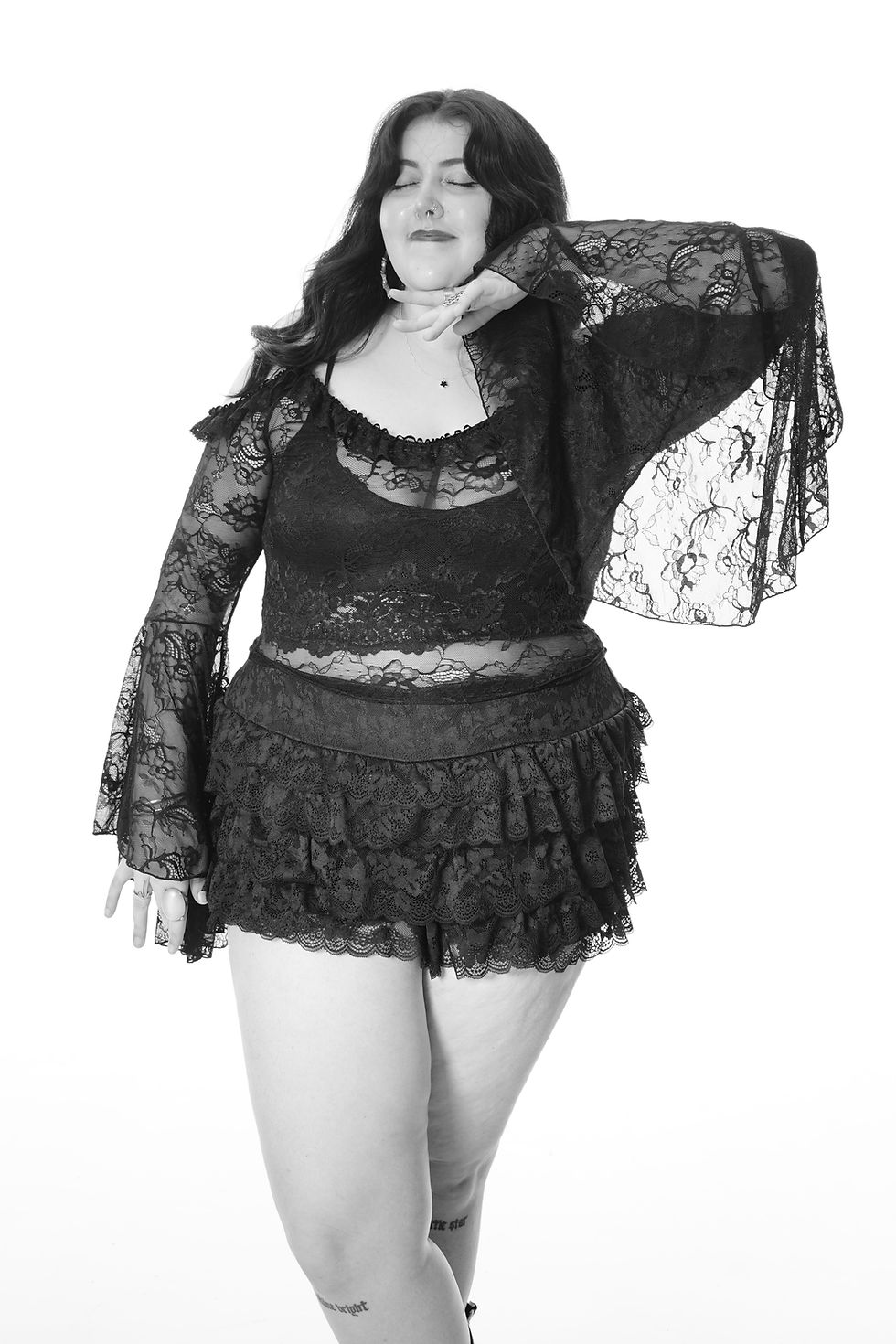
Image credit: Tashi Dema
Finally, the Playlists & Polaroids classic. What’s a lyric from “Monster” that really stands out to you? Walk us through the process of writing it and what it means to you personally.
One of my favorite moments in the song is the line in the second verse: “I’ve seen you change quite literally right before my eyes, your laugh, your taste, you’re somebody I’ll always recognize.” That verse flowed out of me very naturally when I wrote it. The producers I worked with all had this moment where they realized the double meaning behind the lyric “I’ve seen you change.” Watching people catch those little details is always really rewarding. It’s fun to see how those clever moments land with listeners once the song is out in the world.
By putting words to such an isolating yet universal experience, Lila effectively reclaims her vulnerability in a powerful, resonant masterpiece of a song. Overall, Lila reminds listeners that confronting our insecurities can sometimes be the first step toward self-acceptance. “Monster” captures a balance between vulnerability and empowerment, pairing introspective lyrics with heavier production that signals an exciting evolution in her sound. We’re excited to be tuning into Lila’s journey and can’t wait to see what this powerhouse does next! In the meantime, here’s a playlist we’ve curated to capture her vibe.


Comments