
P&P Spotlight: Claire Martine
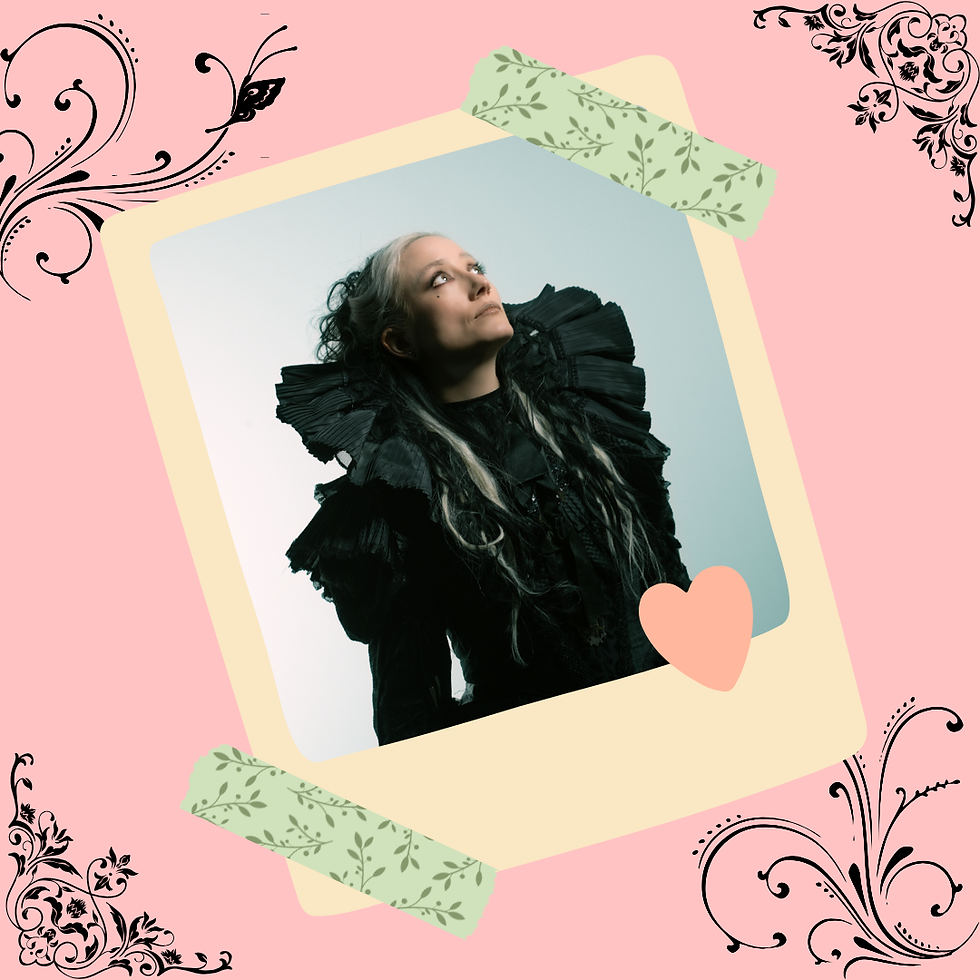
If your playlist needs some spice in the form of fresh, emotionally driven alternative music, look no further than Claire Martine. Aided by a classical foundation through playing the violin, Claire draws inspiration from everyday experiences and relationships in some of the most unique, authentic indie rock tracks we've ever heard. She's been steadily building momentum over the past year - including airplay on 88Nine Radio Milwaukee, a live Studio Milwaukee Session at Summerfest 2025, a festival slot alongside The Army The Navy and Matt Maltese, a TikTok trend based on her track "Take What's Mine," the release of her debut EP, and perhaps most importantly, a pivotal move from Milwaukee to New York City.
She continues her journey in her new singles "Better Safe Than Sorry" and "Got It Wrong," with the next one "Means To An End" coming this week. In this current musical chapter, she explores themes of miscommunication, reflection, and emotional awareness. Especially in the refrain of "Got It Wrong," her tone is direct and conversational, as she sings of the tension between hesitation and expression.
Recently, we sat down with Claire to talk about her recent work, her evolving creative direction, and the moments that shape her songwriting process. Keep reading for our full conversation with her!

YOU'LL LOVE CLAIRE MARTINE IF YOU LISTEN TO: Lizzy McAlpine, Phoebe Bridgers, Gracie Abrams, Beabadoobee, Maggie Rogers, Olivia Rodrigo
What artists did you grow up listening to, and who’s on your playlist today? How have any of these names shaped your sound over the years?
I have pretty eclectic taste in music, and growing up I was surrounded by a wide range of influences. The Beatles were always playing in my house, along with artists like Talking Heads and Elvis Costello, who my parents loved. In middle school, I was really into Twenty One Pilots and they were a huge part of what I listened to at the time.
As I got older, I made a conscious effort to broaden what I was listening to. I realized I had mostly been hearing music by men or male-fronted bands, so I wanted to be more intentional about exploring female artists and producers. Right now, I’m really into artists like SMRS, Okay Lou, Caro Caro Bonito, Hachi, and Aparelli. A lot of them influenced songs like “Better Safe Than Sorry” and “Got It Wrong,” especially in how I approach production and texture. I’m drawn to simple, repetitive acoustic guitar parts and subtle, metronome-like percussion, and I often take small elements from songs I love and reinterpret them in my own work.
Tell us a little bit about growing up in Milwaukee. In the years you lived there, what was the music scene like in the city?
I love Milwaukee and I’m really grateful to be from the Midwest. It’s a very artsy city with a strong theater and DIY community, which I grew up immersed in. I didn’t really engage with the music scene itself until later, when I moved to New York for college, but growing up there definitely shaped my creative foundation.
There’s a really strong folk influence in the Midwest, along with a Midwest emo scene that I’ve always found really interesting. Because the winters are so long, people spend a lot of time indoors, which naturally creates a very creative, self-driven environment. I was also heavily involved in theater, which taught me a lot about collaboration and building things with other people. Even now, that same spirit shows up in how I make music and work with others creatively.
What made you decide to move to New York and what effects did that transition have on your perspective and artistry?
I moved to New York for college in 2020, right around the pandemic period. I originally went for theater because that felt like the natural path if you wanted to be in New York and pursue something in the arts. Even though I’m not focused on theater anymore, I don’t think I would change the decision at all. I was really drawn to the energy of the city and the idea that people come here to create something they feel they couldn’t build anywhere else.
New York and Milwaukee both feel like home to me in different ways now. I think that transition expanded my perspective a lot, especially in terms of creativity and ambition. There’s something about being in New York that pushes you to grow, and I feel like it has influenced the way I approach my artistry by making me more open, intentional, and willing to explore what I can create.

What are some highlights of playing alongside Matt Maltese and The Army The Navy? Did these artists give you any wisdom or advice that sticks with you?
We were all part of the same lineup at Summerfest in Milwaukee, which is a huge music festival. I performed right before The Army The Navy and Matt Maltese on the same stage, which was an incredible experience. I didn’t get a chance to speak with them much, just briefly in passing, but it was still really exciting to share that space with them. Even though it was brief, being in that kind of environment made me think a lot about stage presence and what it means to really connect with an audience. It made me more aware of the kind of performer I want to be and pushed me to focus on building a live show that feels memorable and intentional. It’s something I’m still developing, but experiences like that definitely stay with you.
Tell us a little bit about your reaction to seeing “Take What’s Mine” gain traction on TikTok? What does it mean to you that several new fans are resonating with this song?
It’s been really cool. “Take What’s Mine” was one of the first songs where I had a more hands-on role in the production instead of handing it over entirely to a producer, so it already feels quite personal to me. I wrote it as a companion piece to “2 Bitter,” almost like the two exist as a pair, and it’s one of my favorite songs I’ve made.
I’m honestly a bit amazed it’s gotten traction because it’s quite mellow and introspective. I wrote it while reading One Hundred Years of Solitude by Gabriel García Márquez, and I was thinking a lot about premonitions and the feeling of knowing something is coming before it fully arrives. At the same time, I was going through a difficult moment in a friendship and reflecting on whether I was ignoring signs I should have paid more attention to. It feels very personal, so it’s really meaningful to me that other people are connecting with it. Even just the idea that someone is listening to something I made still feels surreal, but also really inspiring.
In what ways does “Better Safe Than Sorry” represent a new creative direction in your music? What made you want to explore caution and reflection in the song?
With “Better Safe Than Sorry,” I’m really trying to lean into a dreamier shoegaze-inspired sound. Production-wise, it feels like the most expansive and layered thing I’ve released so far. I’ve been really influenced by artists like The Cranberries, Hachi, The Sundays, and Cocteau Twins, and I wanted to pull from that lush, guitar-heavy soundscape in a way that still feels like me. Thematically, it also feels like a turning point. A lot of the songs on this project ended up circling the same ideas, even if they weren’t written at the same time, especially miscommunication and the feeling of not saying what I actually meant. It’s that idea of thinking you should have spoken up, or realizing something was misunderstood. Both sonically and lyrically, it feels like the most honest representation of where I am right now creatively, and it’s something I want to keep building on moving forward.
What inspired you to explore caution and reflection on “Better Safe Than Sorry”?
I tend to overthink a lot, especially when it comes to the things I say and how I show up in relationships. That idea of “better safe than sorry” honestly reflects how I used to process everything. Even looking back at some of the lyrics, a few of them came from moments years ago where I felt like I should have reached out to someone or said something differently, but I didn’t. Over time, those thoughts stayed with me, and writing about them became a way of finally putting them somewhere instead of just holding onto them.
Even though the songs explore hesitation, keeping things in, or miscommunication, writing them has actually been really therapeutic. It feels like I’m taking all those internal conversations I used to have with myself and turning them into something real. I’m someone who naturally thinks a lot and reflects a lot, so this song just felt honest to that part of me rather than something I was trying to change.
What emotions and experiences does “Better Safe Than Sorry” stem from? Did the lyrics remind you of a specific turning point in your life?
This song comes from a situation where I had feelings for someone but never really acted on them. At the time, I wasn’t fully sure what I was feeling, and even looking back now, I think there was a lot of fear around taking that step. Nothing ever happened between us, and I’ve definitely had moments of wondering why I didn’t just take the risk or speak up when I had the chance.
I think the turning point is actually more present-day than in the past. Writing and releasing the song made me realize how often I used to hold myself back because it felt safer. Now I’m in a place where I’m trying to push against that instinct and take more risks, even in my personal life. The song reflects who I was then, but it also feels like a reminder of who I’m trying not to be anymore.

What gave you the idea to frame “Got It Wrong” as a voicemail? How did that concept shape the way you structured the lyrics or delivery?
I work at the front desk of a workout studio, and a big part of my job involves leaving voicemails and calling people to get them to book classes. Because of that, I spend a lot of time listening to the small sounds of phones like dial tones, ringing, and automated messages. That ended up becoming really interesting to me sonically, and it influenced how I started imagining “Got It Wrong.” I actually wrote part of the song a few years ago before I even knew I wanted to seriously pursue music, and later came back to it and built the rest of it with that voicemail concept in mind.
I wanted the song to feel like something you’re overhearing rather than fully presented, almost like a message that was never properly sent. That idea shaped the structure, especially the softer, whispered sections and the way the chorus feels like something left behind rather than fully delivered. I also liked the idea of incorporating literal phone sounds, because there’s something really emotional about them. Even something as simple as a ringtone can create anxiety or anticipation, and I wanted to capture that feeling in the track.
Voicemails are usually one-sided and final. Did that idea influence how you approached the perspective or voice in the song?
I actually hadn’t thought about it that way, but that’s really true. Voicemails are one-sided and feel very final, but in this case it doesn’t feel heavy to me. The song is quite small and contained, and even though the chorus is emotional, there’s also a lightness to it, like crying but knowing you’ll be okay after. It’s a bit self-aware in that sense. I think that one-sided feeling actually reflects a lot of my writing in general. A lot of my songs come from things I wish I had said in the moment but couldn’t, so instead they become a space where I can say them now. It ends up feeling like a collection of internal thoughts or conversations with myself. In that way, the voicemail idea fits naturally, because it’s almost like I’m sending out messages that were never spoken out loud.
Was it important to you to keep the refrain of “Got It Wrong” unfiltered, and sounding like something someone would actually say out loud?
Yeah, I really liked how many words I was able to fit into that first part of the song, and I also love a rhythm that feels slightly off-kilter. The phrase “I got it wrong” is something I, and I think a lot of people, can struggle with. Even the line before it feels very defensive, like “I’m always right, but I got it wrong.” That’s a mindset I recognize in myself, where I can get a bit defensive before admitting I’ve made a mistake. It’s something I’ve been working on, learning that it’s okay not to always be right. In the end, it’s often better to just acknowledge when you’ve got something wrong instead of holding onto pride. So keeping that refrain unfiltered felt honest to that internal process and what I’m still learning through.
If “Better Safe Than Sorry” and “Got It Wrong” had a mood board or visual aesthetic, what would it include?
It would feel quite gloomy but still soft and atmospheric, with a lot of rain and smudged-out eyeliner. There’s also a strong digital element in the production that I really love, so I’ve been thinking a lot about incorporating visuals like old flip phones, early iPads or iPod Nanos, tangled headphones, and slightly nostalgic tech imagery. At the same time, both songs feel very springtime to me, like that in-between moment where it’s finally warmer but it still rains a lot. I’ve been making Pinterest collages for them, and the colors I keep coming back to are purples and greens. It feels a bit nostalgic, a bit emotional, but also like things are starting to open up again.

Tell us about what you have planned for the rest of 2026. Is there anything particularly exciting fans should be looking out for?
I have a couple more songs coming out, and these are the first two tracks from my upcoming EP, which I’m really excited to finally share. It feels like the most “me” project I’ve made so far, and I’m looking forward to people hearing it as a full body of work rather than just individual singles. I also really want to keep playing live more. I’ve been performing more this spring, and I want to continue building on that. I love going to shows just as much as I love playing them, and one of my goals right now is to open for artists on tour and keep growing in that live space.
What’s a lyric from “Better Safe Than Sorry” or “Got It Wrong” that really stands out to you? Walk us through the process of writing it and how it speaks to you personally.
One part I’m really proud of is the first verse of “Got It Wrong.” I love internal rhyming and when the rhyme scheme feels slightly imperfect but still intentional. Lines like “muscle sore, that coat you wore” and “I swore I promised you I’d answer every single text on New Year’s resolute” are really important to me because they build a very specific visual moment while also carrying a lot of emotion. That verse came from a situation where I once again didn’t say something I should have, and instead just held onto it.
I was really focused on imagery and detail, like remembering what someone was wearing or the feeling of the end of a day. I also like how much “I” and “you” repetition there is, because it reflects how stuck I was in my own thoughts about that person. I’m also proud of phrases like “New Year’s resolute,” because it’s a twist on “resolution” that feels more intentional and personal. I really enjoy fitting a lot of meaning into small lyrical moments, especially when it reflects miscommunication or things left unsaid.
Through her songwriting, Claire invites listeners into moments of vulnerability and self-awareness, offering a quiet reminder that understanding often comes through what we almost say as much as what we do. Her recent single releases mark a defining step in her evolving artistry. Her music blends intimate storytelling with understated, textured production, turning personal reflection into something deeply relatable. If you're loving "Better Safe Than Sorry" and "Got It Wrong," and can't wait for "Means To An End," check out this playlist we've curated to capture her vibe!


Comments