
P&P Spotlight: ÊMIA
- Michelle Powell
- Mar 5
- 13 min read
Updated: Apr 14
For ÊMIA, music is not merely an auditory experience - it is an emotional processing, an examination of personal anecdotes, and connection with others who may feel invisible. The Vietnamese-American artist's latest single, “Corinne,” started as a text message on her phone but blossomed into something even larger. A struggle with jealousy, comparisons, and the human desire to feel seen and loved, "Corrine" encapsulates universal themes. From her studies in law school to her deliberate songwriting process, ÊMIA pursues everything she does with curiosity and dedication. She uses the piano to work out melodies and gibberish lyrics within expressive voice recordings; then, she perfects her songs through repeated listening and editing, rendering her songs specific yet resonant.
Playlists & Polaroids is beyond excited to dive into the world of "Corinne." We had the privilege of speaking with ÊMIA on the stories behind the song, as well as how her life shapes her artistry. Continue for our full conversation with her!

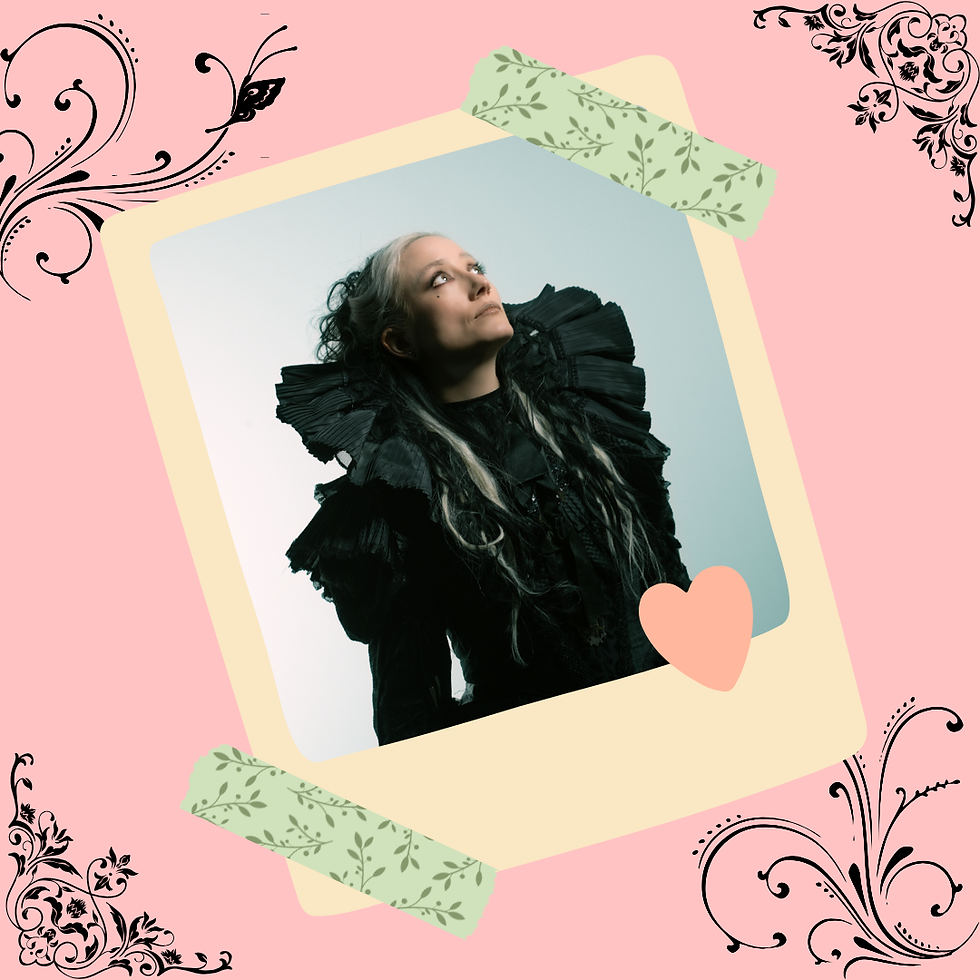
Photo credit: ÊMIA, graphic created by Karly Ramnani
YOU'LL LOVE ÊMIA IF YOU LISTEN TO: Clairo, Phoebe Bridgers, Girl in Red, Griff, Taylor Swift, Olivia Rodrigo
Who do you think people might compare your music to? Any artists you’d say you sound a bit like?
I think a lot of people compare my writing style to artists like Taylor Swift, Olivia Rodrigo, and Michelle Branch. Basically, anyone who focuses on storytelling in their songwriting. I actually feel pretty connected to that description myself.
Who were the artists on repeat for you growing up? And who’s on your playlist these days? How do these influences make their way into your music?
Growing up, my favorite artist was Avril Lavigne. I loved everything about her, from her perspective to her voice, and I enjoyed watching her evolve from that pop-punk teen sound to something more polished. These days, I gravitate toward artists who are big world-builders. I really admire Rosalia, Taylor Swift, Banks, Griff, and my all-time favorite producer, Lido, who worked on early Halsey tracks and now produces R&B-pop music. I love artists who have a strong sense of how their sound connects with their visuals, and I always respect it when someone creates big, cohesive artistic moments like that.
Whenever these artists push themselves to try something new, whether it is experimenting with a style of production or writing something very personal or outside their own experience, it makes me reflect on what would be challenging for me. I love seeing Rosalia learn to sing in different languages, and how that changes the way she performs and adds meaning to her lyrics. It feels like a method acting approach for a musician, and I find that really inspiring.
A few years ago, Nina Nesbitt was one of my biggest inspirations because she self-produced her EPs before co-producing her debut album. Griff does something similar, and seeing them learn something new and incorporate it into their artistry motivates me to do the same. I am obsessed with that process and the way it encourages growth, creativity, and personal expression in music.
“Corinne” is incredibly vulnerable, and you’ve said it was the song you were most scared to share. Was there ever a moment you considered not releasing it, and what ultimately gave you the courage to put it out?
I think part of what made it so scary is that it’s a name. Anytime there’s a name, it immediately feels personal. I definitely had moments where I didn’t think I would release it. For a while, it felt like one of those songs that was meant just for my friends — the people who know me and know my life story. It was something nice to have, but not necessarily something I imagined putting out into the world, and especially not as a single.
What really changed things was playing it for other people and seeing their reactions. It felt incredibly validating and made me realize that this song is a piece of me, and that’s what art is for. Art is meant to be a safe space to be vulnerable. That helped me feel less uncomfortable with the idea of other people hearing it. I think part of what made it so scary is that it’s a name. Anytime there’s a name, it immediately feels personal. I definitely had moments where I didn’t think I would release it. For a while, it felt like one of those songs that was meant just for my friends — the people who know me and know my life story. It was something nice to have, but not necessarily something I imagined putting out into the world, and especially not as a single.
What really changed things was playing it for other people and seeing their reactions. It felt incredibly validating and made me realize that this song is a piece of me, and that’s what art is for. Art is meant to be a safe space to be vulnerable. That helped me feel less uncomfortable with the idea of other people hearing it.
What made you choose Corrine for the name?
I'll just say it because it’s a good story. The name Corinne has a big meaning to me because when I was 15, I had this huge crush on a guy. We had been hanging out a lot, and one day - actually, this happened several times - he did that classic speech where he admits he has a girlfriend but likes someone else. I was like, is he talking about me? Turns out he was. He confessed on the bus, but nothing ever happened. His girlfriend at the time was named Corinne.
Fast forward ten years, and I go through a similar situation. I had strong feelings for a guy who also had a girlfriend, and he confessed his feelings for me through an Invisible Ink text message. Again, his girlfriend’s name was Corinne. Not the same woman, just the same coincidence. Nothing came of it either. In both cases, I cut off communication with the guys, not for moral reasons, but because it felt off. They ended up figuring things out by doing nothing, so I just stepped away.
The moral of the story is that there seems to be something about the Corinnes in my life. It was a weird coincidence, but it stuck with me. It’s funny how certain names or experiences just keep appearing, and looking back, it feels like a small, strange pattern that became part of my story.
The song explores jealousy, comparison, and self-worth — feelings many people experience quietly. Did writing “Corinne” change how you understand those emotions in yourself?
Yes, it did. I think people often give very wise advice about jealousy, and it is easy to understand it on paper. You can tell yourself that insecurity is about you, not the other woman, and that resentment usually points to something you feel you are missing. I understood that logically, but when I am actually triggered by something, I do not always have the calmness or maturity in that moment to work through it so clearly. Writing the song forced me to slow down and really look at the feeling. I realized that underneath all of it, I just want to be chosen and loved. That is the real wound.
Putting everything into a song made the feeling less scary. Naming it gave it less power. It now exists in a three-minute song that I created with intention and care, instead of something I try to avoid or push away. I do not think it completely changed how I understand the emotion, because I always knew what it was and what it did to me. What changed was the repetition of doing the work. By facing it fully, it does not hold the same weight over me anymore.
Why do you think comparison between women is still such a common experience, and do you believe social media intensifies that?
One hundred percent. Social media makes it so much worse. Before, you might see a really cool girl and think about her for a moment, but you would probably never see her again. Now she is on your TikTok feed every few swipes. Once I get fixated on something, I want to know everything about it. It is not just looking anymore. It becomes researching, scrolling, and filling in a whole story about someone I do not actually know. That makes comparison feel deeper and harder to escape.
On top of that, there are metrics everywhere. It is not just access to people’s faces and lifestyles. There are numbers attached to everything. Followers, streams, likes. It becomes quantitative proof that someone is doing better than you. Even in music, things like stream counts make success feel constantly visible in a way it did not used to be. I love the internet and I think there is so much brilliance, humor, and creativity online. But it also gives us endless information we were never meant to carry, and it is always there, whether you want it to be or not.
When you’re writing something this personal, how do you decide what stays private and what becomes a lyric?
I normally always start with no privacy at all. This is my foundation: all is fair game. It is then that I determine what is and isn’t necessary for the song. If it is a skit that is not as serious, such as songs about boys that I am upset with, then I will include tiny details that amount to Easter eggs, such as a location or something that is insignificant except to me. If I am playing that song for someone that does not know me, then such details merely become a part of the lyrics, and that is perfectly all right because they do not specifically contribute or subtract from the message that is being conveyed and thus remain that way.
Over the years, I have learned about intentionality. Every word is important, and information about myself has to have more to do with art than just expressing emotions. If information fails to enhance a song or its meaning, then it is kept inside. I would never release an actual name or place unless it is absolutely necessary and only if it leads to a better story.
For me, when those details are used well, it’s what gives the artwork its power. It’s that blending of what you want to express and what you want to keep hidden that is what allows me to make sure that these songs are authentic and relevant, rather than just something written in a diary.
How do you know when a song is “done,” especially when it’s emotionally heavy?
I also know a track is finished once it passes what I term as the “Daily Commute Test”. I play it during my daily commute, and this is where I get to realize what is working and what is not. Even if there is a part of it that is pulling me out of it or if it is lacking some aspect of feeling, I get to work on it.
For songs that carry as much emotional weight, it's all the more significant. Listening to it in this manner, in a completely objective and normal environment, helps me detach myself as a person and form an independent assessment of the song as if it is artwork separate and apart from me.
The first time I know it's complete is when I listen back, and it doesn’t even sound like it’s mine. It just falls on my playlist as it rightfully should be there. Yeah, that’s when I can take a step back and know that song is complete.

Photo credit: ÊMIA
What do you hope listeners feel when they realize they can connect to “Corrine” too?
I hope listeners feel less alone and validated when they realize, “this song is about me too.” Jealousy and comparison can feel shameful, especially for women, because there’s this pressure to always be supportive and perfect. I want people to know that these feelings are human and normal.
It’s easy to be self-critical for feeling this way, but recognizing these emotions is part of existing and navigating the world. I hope the song encourages empathy, both for yourself and even for the people you admire or envy.
The creation of the song and its video was inspired by remarkable women I admire, some of whom I also wished I could be more like. My hope is that listeners understand these feelings are universal and natural. Feeling jealousy or comparison doesn’t make you bad — it means you’re alive, you care, and you want to be loved, just like everyone else.
If you could say something to the version of yourself who inspired “Corinne,” what would you tell her now?
I would tell her to finish the song. I would tell her that it really is so much better on the other side. I do not think she could fully imagine what it would feel like to not be so sad about it anymore, to look back and realize that this experience, and the people involved, pushed her to face long-standing childhood wounds that needed attention.
I would also tell her that her feelings matter and that writing them down is the right thing to do. Putting everything into words is far healthier than ignoring it, minimizing it, or trying to talk herself out of it. Being honest about it, instead of being afraid of it, is what ultimately leads to healing.
What’s something you’ve learned about yourself from performing that you didn’t expect?
I’ve learned that I can be okay with things not sounding perfect in a way I never expected. When I first started playing shows, even small mistakes would throw me off completely, and I would punish myself in my head for the rest of the set. Later, when I watched videos, I realized it really wasn’t that bad and that people were enjoying it. I just wish I had been able to enjoy it in the moment too, instead of overthinking everything.
Now, I actually welcome the unpredictability of live performance. Knocking over a glass of water or hitting a wrong note forces me to be fully present and engage with the audience in real time. Those imperfect moments often end up being the ones people connect with the most. I no longer feel the need to try too hard because the unplanned moments make the performance feel alive and authentic.
Performing songs like “Corinne” has shown me the beauty in being present. Even when I hit the wrong note or stumble while telling a story, it can turn into something real and even funny. Those moments create a connection with the audience that polished perfection never could, and I’ve come to love that about live music.
What’s the best thing that someone’s ever said to you about one of your songs?
The best compliment anyone's ever given my songs is to say that my music has inspired them to do something. It can be something like admitting one's feelings to another, and I always feel so privileged. I love that a song I wrote would challenge someone to take some kind of bold or important step in their own life.
One moment that really stuck in my head was when one of the listeners told me my music inspired her to go to Antarctica. She said she had wanted to go but didn't feel like she was brave enough. She sent me a clip from her trip, and I was entirely blown away. I could never have imagined that a ballad I had written could encourage such a big, scary step from somebody.
Those are like, the biggest compliments that I could ever, ever receive. It's way more than someone has enjoyed any music; it's on being empowered, chosen themselves, and did something courageous. That's hopefully what my songs can do.
How has your approach to vulnerability changed since you started sharing your music publicly?
I think, by sharing my music, I've learned the value of vulnerability in my own life to the point where I need to work on it in a different, less refined way. Music allows me to express what I’m insecure about, what makes me sad, and I can mold it in a perfect way. It’s a valuable part of being a human, yet it does make it more challenging to do on a daily basis.
Occasionally, I find myself censoring myself around people that I’m close to, feeling like I’m coming across as awkward, petty, or simply “unpoetic” enough. The music training has made me thankful about the words that express the feelings that I want to convey to the world, but sometimes it’s necessary to remember that the world doesn’t need polished honesty.
The more that I write and the prouder that I am of what I have created, the more that I have come to realize that the greatest form of vulnerability that can be done within a song and within a life is simply to be truthful without care for what that might look like.
What's next for you? New music? Any shows?
I don’t have any shows lined up just yet, but I know I’ll be doing some album-related performances eventually. I really enjoy when opportunities to play present themselves naturally, like opening for other artists—it feels serendipitous.
I just finished my first year of law school, so I’m learning to balance everything without waiting until the last minute. My focus is on releases and videos, sticking to the plan I set for this year.
The album has 17 tracks, and my goal is to release ten singles before the full album comes out next fall. The next single, technically track 12, will be the fourth to release. It’s different from “Corinne,” but it exists in the same cinematic universe, and I’m excited to see where the story goes next.
Finally, the P&P classic! What's a lyric from “Corinne” that stands out to you? Walk us through the process of writing it and how it speaks to you personally.
My favorite lyric is in the second verse, when I say, “I’m still that kid from the cold Midwest wasting $19 at a CVS.” That line takes me back to being a kid, buying something like a MAC lip gloss and truly believing it would give me the face I wanted. It makes me think about all the things I have bought over the years with the hope that they would somehow change my life. That feeling is so ordinary and so real, the constant struggle to feel good enough when it seems like there are endless examples of how much better you could be. When I have played the song live, people always mention that lyric. There is something very unglamorous about buying makeup at CVS, and that is exactly why it sticks.
Most of the time, I feel most comfortable writing on the piano. I usually start with a feeling and let that guide what I play, singing gibberish words that reflect whatever is at the top of my mind. I am a better editor than I am at getting it perfect right away, so I like to record an idea, step away from it, then listen back and figure out where it wants to go. “Corinne” was different though. It is one of the few songs on the album where I wrote the lyrics first, mostly out of convenience. At the time, I was working as a piano teacher and constantly traveling between houses, so it was easier to write things down in my notes app than to sit down and produce music.
I started writing “Corinne” on Christmas Eve while going through something emotionally, which is a really familiar experience for me. I was sad about someone I loved not choosing me, while being surrounded by the forced happiness of the holidays. We were driving through a Christmas light show we go to every year, music blasting, and I was writing lines about the things I did not like about myself. I knew I wanted to call the song “Corinne,” but I did not want it to be about one specific girl. Instead, I started listing names that sounded good when sung and pairing them with my insecurities. Once I had that framework, the song almost wrote itself. It became a map of everything I was struggling with, and all I had to do was follow it.
ÊMIA's fearless vulnerability and effortless knack for storytelling make her music impossible to resist and easy to connect with. We can’t wait to see what this powerhouse does next, and in the meantime, we'll be listening to “Corinne” on repeat. Here's a playlist we've put together to capture her world!


Comments